Author: Ileana Kane, Owner of Ileana Kane Marketing
Published: May 23, 2026
Search engine optimization is the work that helps a website appear when people search on Google. It isn’t one job. It’s a set of connected tasks that improve visibility in the SERPs and make your site easier to trust and use.
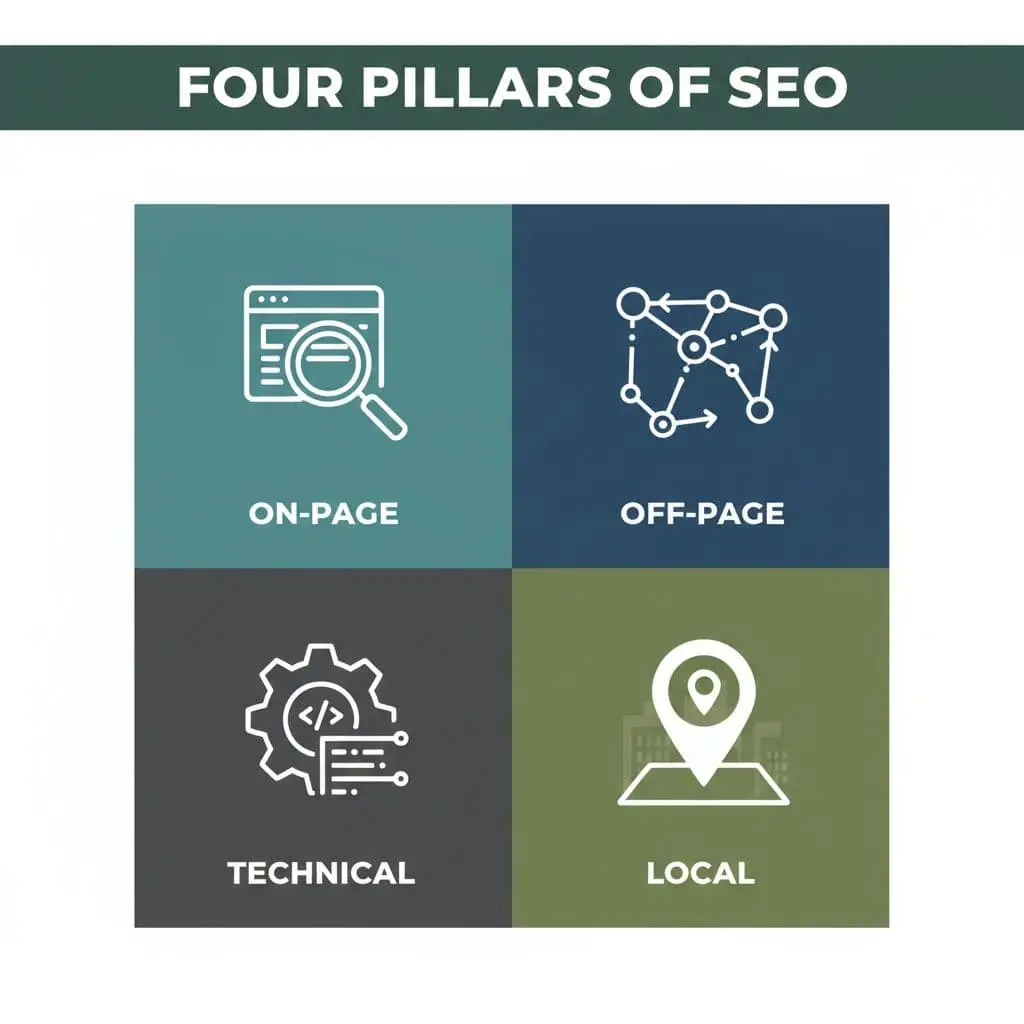
The four main types are on-page, off-page, technical, and local. Each one plays a different role, and together they help a business show up for the right searches while increasing organic traffic.
Key Takeaways
- The four main types of SEO—on-page, off-page, technical, and local—work together to improve visibility in SERPs, build trust, and drive organic traffic.
- On-page SEO focuses on high-quality, readable content with clear structure, headings, and keywords that match search intent.
- Off-page SEO builds credibility through quality backlinks, reviews, brand mentions, and social proof to support E-E-A-T.
- Technical SEO ensures site speed, mobile-friendliness, crawlability, XML sitemaps, and proper indexing for better performance.
- Local SEO targets nearby searches with a complete Google Business Profile, NAP consistency, location pages, and local reviews.
At Ileana Kane Marketing we are here to help make your site visible to the world. Connect with us here.
On-page SEO helps search engines understand your content
On-page SEO refers to the practice of optimizing individual web pages to rank higher and earn more relevant traffic in search engines. By focusing on your content, structure, and HTML source code, you ensure that search engines can easily crawl, index, and understand the topic of your page.
Use clear topics, headings, and keywords that match search intent
Title tags, meta descriptions, H1s, and H2s give your content structure. Natural keyword use adds context, but the real goal is simple: match the searcher’s intent and answer the question clearly.
Write content that is useful, readable, and easy to scan
Strong on-page SEO prioritizes high-quality content that is readable first and improves user experience. Short paragraphs, internal links, helpful images, and alt text all enhance the page. Keyword stuffing does the opposite because it makes content harder to trust and harder to read.
## Off-page SEO builds trust beyond your website
Off-page SEO happens elsewhere on the web, a crucial aspect of search engine optimization. It shows search engines that other people know your business and consider it worth mentioning.
Backlinks and reviews can strengthen your credibility
A backlink is a link from another site to yours. Link building through quality backlinks from trusted sites can build authority. Reviews matter too, especially for local companies, because they show real customer experience and support E-E-A-T (Experience, Expertise, Authoritativeness, and Trustworthiness).
Brand mentions and social proof support visibility
Not every signal is a link. Mentions on local directories, social media, and business listings can reinforce trust. Social media engagement also boosts off-page SEO signals. They won’t replace a solid website, but they support it, contributing to overall search engine optimization.
Technical SEO makes your site easier to crawl and use
more calls, quote requests, and map views.
Google Business Profile, map pack visibility, and NAP consistency
A complete Google Business Profile can improve your chance of showing in the map pack. NAP consistency for your business name, address, and phone number across the web prevents confusion and boosts local SEO performance. Optimizing your Google Business Profile further enhances visibility.
Location pages, local content, and nearby reviews matter
Service-area pages, or local landing pages, help you show up in the cities you serve. High-quality content and recent reviews add relevance to local SEO, especially when they mention the work you do and where you do it. Local backlinks from neighborhood sites can also lift your rankings in the SERPs.
Frequently Asked Questions
What are the four types of SEO and how do they connect?
The four types are on-page, off-page, technical, and local SEO. On-page optimizes content on your site, off-page builds trust externally, technical improves crawlability and speed, and local targets nearby searches. They connect to create a complete strategy that boosts visibility, trust, and traffic.
Why is on-page SEO the foundation of search engine optimization?
On-page SEO tells search engines what your page is about through titles, headings, keywords, and readable content. It matches search intent to help users find answers fast and improves user experience. Without strong on-page elements, other SEO types can’t fully support rankings.
How do backlinks and reviews help off-page SEO?
Backlinks from trusted sites build authority, while reviews show real customer experience and support E-E-A-T. Brand mentions and social proof add extra trust signals. They tell search engines your site is credible without being on your own pages.
What technical issues hurt SEO performance most?
Slow site speed, lack of mobile-friendliness, and broken links frustrate users and bots. Poor site structure and missing XML sitemaps make crawling harder. Fixing these ensures Google indexes your content properly and visitors stay engaged.
How can local businesses improve their map pack visibility?
Optimize your Google Business Profile fully and keep NAP consistent across the web. Create location pages with relevant content and gather recent reviews. Local backlinks from nearby sites further boost rankings for service-area searches.
The takeaway
The 4 types of SEO are connected in search engine optimization. On-page SEO with high-quality content needs technical SEO for trust and authority; a trusted brand needs solid technical SEO; local businesses need both for leads from nearby searches.
Search engine optimization is a long-term strategy that starts with keyword research to drive organic traffic. Start with the basics and focus on what brings calls, not empty traffic. If you want a clearer plan, book a No-cost discovery call.