Google is starting to answer local buying questions inside Ask Maps, and that changes where customers make decisions. If someone can ask Maps which cafe has outlets, which roofer is nearby, or which stop fits their route, they may choose a business before they ever visit a website.
That shift matters for local companies, and it also creates a practical service model for agencies, freelancers, and consultants. The core work is not complicated, but it does require a clean Google Business Profile, strong reviews, current photos, and regular posting.
What Ask Maps changes in local search
Ask Maps is a newer Google Maps experience tied to Gemini. In simple terms, it brings conversational AI into navigation and local discovery. Instead of typing a standard search and sorting through listings, users can ask direct questions and get a quick answer inside Maps.
That matters because the question itself is often a buying signal. A person asking for “coffee shops nearby with outlets” or “restaurants on this route” is not browsing for fun. They are close to taking action.
Ask Maps also changes how people get information. Rather than reading dozens of reviews one by one, the system can summarize details from reviews, photos, business profile data, and other web information. As a result, local businesses may win or lose visibility based on how clearly Google understands what they offer.
A few examples make this easier to picture:
- “Where are good restaurants near me?”
- “Are there any coffee shops on this route with room to work?”
Those questions sound simple, but they depend on business data being complete and current. If a business profile is thin, if reviews lack detail, or if photos are outdated, Google has less context to work with.

For local businesses, the risk is clear:
- More search activity is happening inside AI-assisted
- People can get pre-purchase answers without opening a business
- Competitors with better profile data may capture the visit, call, or direction request first.
That is the core shift. Ask Maps does not replace local SEO, but it changes where local SEO pays off.
Why small businesses are worried, and why agencies are paying attention
Nick Ponte frames the moment as “AI guilt,” which is his label for the feeling that competitors are moving faster with AI. Whether you call it guilt or FOMO, the business effect is the same. Owners know customer behavior is changing, but most have not updated their local presence for AI search.
That gap creates demand. Ponte shares examples from his community, including a member named Brandon who landed monthly deals at $1,000 and $4,997. He also says his agency collected $15,900 in one month from new small business clients tied to local visibility services. Those numbers are not a promise, but they do show why local AI visibility is getting attention.
The reason is straightforward. Small businesses already understand that AI is influencing search. They may not know how Ask Maps works, and they may not know how Gemini, ChatGPT, and Google Business Profile connect, but they know they cannot ignore it.
A few signals stand out:
- Many owners are tired of hearing generic social media pitches, but they still respond to AI visibility because it feels new and urgent.
- Businesses that already depend on phone calls, foot traffic, or local bookings have more to lose if they disappear from AI-assisted local search.
- Agencies can package work that owners already value, such as reviews, profile updates, and posting, then tie it to Ask Maps visibility.
The easiest way to explain the offer is simple: if Google cannot understand a business clearly, AI tools are less likely to recommend it.
This is why the opportunity is not about building a new AI app. It is about improving the signals Google already uses to describe a business. That makes the service easier to sell and easier to deliver than many “AI agency” offers that sound impressive but do not connect to daily business needs.
How Ask Maps decides which businesses to mention
Ponte’s approach starts with Gemini itself. Since Ask Maps is built on Google’s AI layer, he suggests using Gemini’s Guided Learning feature to understand what Google says matters.
Use Gemini’s Guided Learning for a current playbook
Guided Learning is a free Gemini feature that walks through a topic step by step. In this case, the prompt is simple: ask how to optimize a business for Ask Maps or AI-driven map search.
Gemini points to three core areas:
- Rich business profile details
- Review strategy and review content
- Visual content, such as photos and recent updates
That guidance is useful because it goes beyond the old habit of only checking name, category, and address. Gemini is looking for more context. It wants details that help it answer real user questions.
For example, a user may ask whether a cafe is laptop-friendly. That answer may depend on review text, photo context, and profile attributes, not only a category label. A salon might show up for one kind of query because reviews mention quick scheduling, while another might show up because customers mention color work and long appointments.
The practical benefit is that Guided Learning can also keep going. A user can ask follow-up questions about reviews, photos, or profile fields and get more direction without hunting through scattered articles.
Start with a complete Google Business Profile
The first requirement is simple. A business needs a claimed and active Google Business Profile. Without one, the business is unlikely to appear in the map pack, and that also weakens its chance of appearing in Ask Maps answers.
Ponte gives the example of a local search such as “roofer Miami.” The visible map listings are all tied to Google Business Profiles. That is the local data layer Google already trusts.
Once the profile exists, the next step is to complete it well. That includes the business description, categories, links, attributes, hours, contact details, and connected social profiles when available. A thin profile gives Google less to work with. A complete one improves relevance and trust.
A good profile also needs maintenance. Old hours, broken links, and unanswered reviews make a business look neglected. Meanwhile, fresh updates give Google new signals about what the business does today.
Reviews and responses matter more than most businesses think
Reviews are not only about star ratings. The text inside reviews helps Google understand what customers experience. That is a major point in this Ask Maps model.
If several reviews mention fast service, easy parking, helpful staff, or work-friendly seating, those details can help support direct-answer queries. In other words, reviews give Google natural language evidence.
Responses matter too. Ponte recommends replying to reviews consistently, and he shows how AI can help generate those replies with a time delay so they look natural.
That helps a business stay active without asking the owner to write every response manually.
There is also a growth angle here. If better reviews improve visibility, then review generation becomes more valuable than before. It is no longer only a reputation task. It is also a search visibility task.
Fresh photos and posts give Google more context
Google does not rely only on text. Photos and posts help it understand the look, feel, and current activity of a business. That is why Ponte folds posting into the Ask Maps offer.
Regular Google Business Profile posts can add useful context about services, offers, location-specific expertise, and current activity. The same is true for updated photos. A business that posts often gives Google more recent material to interpret.
The key is relevance. A post should help describe what the business does and who it serves. Simple, clear language works better than vague slogans. If the business serves a local market, local terms should appear naturally.
Using GoHighLevel to make the work repeatable
The delivery system Ponte shows throughout the video is GoHighLevel. He uses it as the operating system for profile audits, review requests, review replies, social posting, and follow-up automation.
The value of this setup is not that it performs magic. The value is that it puts repeatable tasks in one place, so a small team can manage local visibility work at scale.
Audit and optimize the profile inside one dashboard
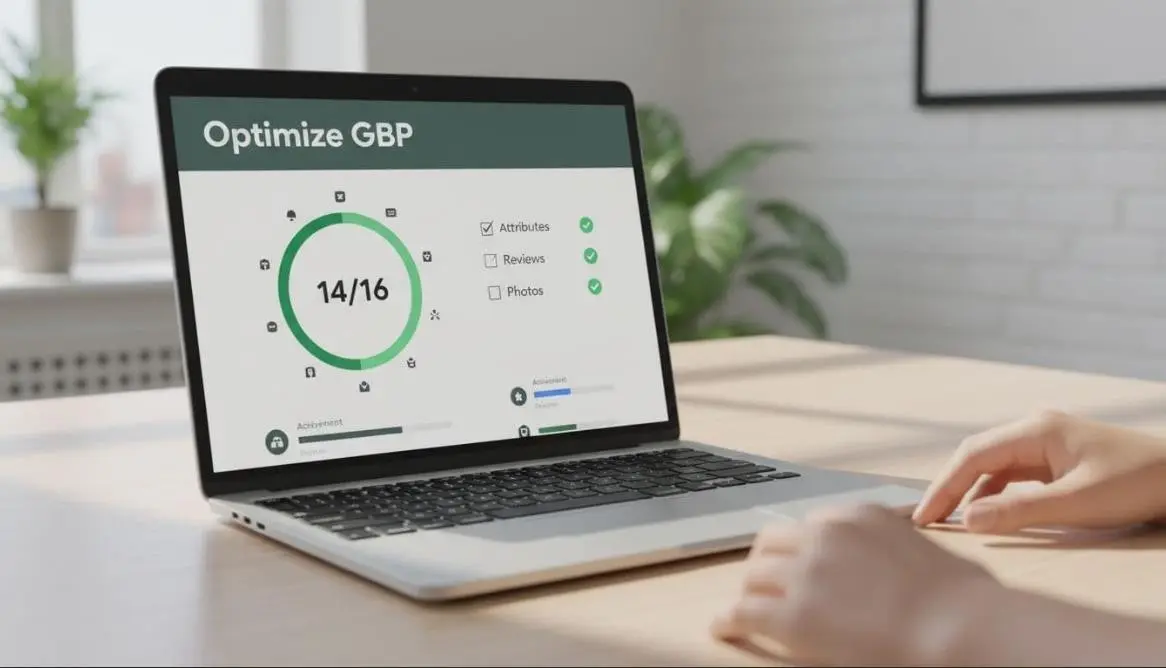
Ponte shows a Google Business Profile optimization area that scores the profile and highlights missing work. In his example, the profile has a score of 14 out of 16, with suggestions to improve it further through added citations, links, and connected assets.
That kind of scoring matters because many owners do not know what is missing. They know they have a listing, but they cannot tell whether it is strong or weak. A simple score and checklist creates a clear starting point.
This also makes the service easier to explain. Instead of selling a vague “AI maps package,” an agency can show what is incomplete, what needs updating, and how those changes support local visibility.
Turn past customers into new reviews
One of the most useful parts of Ponte’s workflow is review generation. He explains that many businesses already have customer lists in tools like Square, Stripe, or QuickBooks. Those contacts can be imported and used for review request campaigns.
That gives a business an immediate way to ask past customers for feedback by text or email. It also creates a monthly service opportunity because the process can keep running after each purchase or appointment.
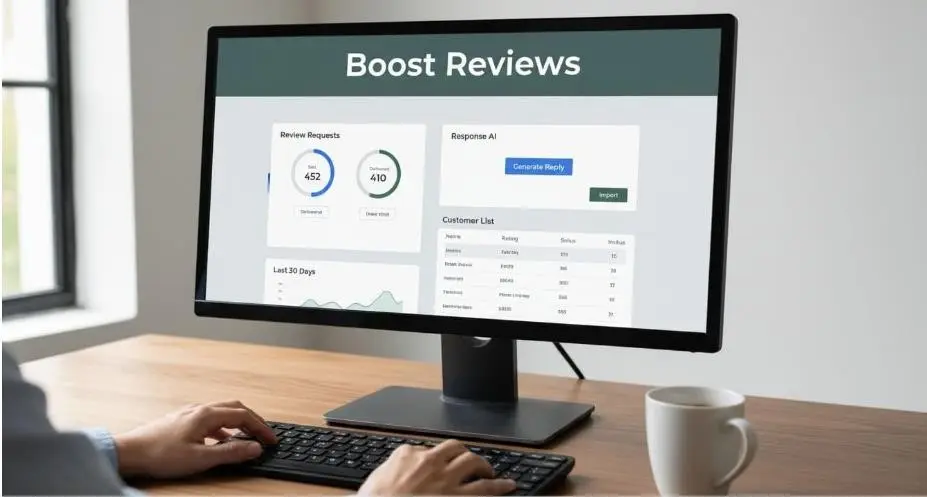
He also shows a review page and a post-purchase automation that sends customers to leave feedback. That makes the service ongoing instead of one-time. In addition, review widgets can place those testimonials on the business website, which helps with trust after the click.
Publish Google posts and social content without writing from scratch
Ponte also uses GoHighLevel’s social planner to publish content to Google Business Profile and social channels from one screen. That includes Google, Facebook, Instagram, and LinkedIn.
The useful part is the AI writing support. He shows the platform creating post ideas, writing local business copy, and generating images to go with the post. That reduces one of the main bottlenecks in local marketing, which is the time it takes to create content consistently.
He also points out a smart repurposing tactic. New reviews can become social posts on a weekly schedule. That keeps the business active and gives reviews a second use beyond the profile itself.
What businesses may pay for this work
The video includes a few pricing examples. They are best viewed as examples from the market, not guaranteed outcomes.
This table shows the ranges Ponte mentions:
| Offer type | What it includes | Price example mentioned |
| Review and
reputation package |
Review requests, monitoring,
replies, reputation tools |
$500 to $2,000 per month |
| Social posting
service |
Google Business Profile and social
media posting |
$500 to $1,000 per month |
| Broader local
visibility retainer |
Local search and AI visibility help | Examples shared at $1,000 and
$4,997 per month |
The key takeaway is that the offer becomes easier to sell when it connects to work owners already understand. Reviews, profile upkeep, and posting do not feel abstract. They feel tied to calls, visits, and booked jobs
How to land clients with an Ask Maps offer
Finding clients for this service follows a simple pattern. First, build a targeted list. Next, audit what those businesses already have. Then, send a short message tied to a visible problem.
Build a lead list with Gemini
Ponte uses Gemini to build prospect lists by location and niche. One useful filter is businesses already running Google Ads. His reasoning is practical. If a business spends money on ads, it has already shown a willingness to invest in marketing.
That does not mean every lead will close, but it does improve the list quality. A local roofing company, med spa, pool cleaner, law office, or home service brand already
buying traffic is often more open to a visibility fix than a business that avoids marketing altogether.
The list should include the business name, website, niche, and decision-maker when possible. That creates enough structure to move into outreach quickly.
Use audit reports to create a reason to reply
After building the lead list, Ponte runs those businesses through an audit tool inside GoHighLevel. The report shows weak areas such as poor review response rates, low website performance, weak online reputation, or an incomplete Google Business Profile.
He shows an example with an overall score of 44. A report like that works because it gives the business owner something concrete to react to. The message is no longer “I sell marketing.” The message becomes “your profile is weak in areas that affect visibility.”
This type of audit also works well because it supports the Ask Maps pitch without sounding trendy. You do not need to persuade a business owner that AI matters in theory. You can show the gaps that affect how Google reads the business today.
The best outreach angle is often the simplest one: “I checked your local presence, and here is what Google still cannot understand clearly.”
Keep outreach simple and tied to visibility
Ponte’s outreach examples are short. He avoids long explanations and gets to the point fast. That fits this offer because the hook is new, but the fix is familiar.
A few message angles from the video include:
- “I noticed you are not showing up in AI responses for [service] in [area]. Want help fixing that?”
- “Have you heard about Ask Maps? Your business is missing some signals Google uses there.”
- “I ran a quick visibility check on your Google Business Profile and found a few weak spots. Want the report?”
The best version of this message is local and specific. Mention the service, mention the city, and mention one visible issue. That may be missing review replies, thin profile details, or lack of recent posts.
It also helps to check the business in Google first. If the profile is already strong, the message needs a different angle. Good outreach starts with a real observation, not a canned claim.
Frequently Asked Questions
What is Gemini Ask Maps?
Gemini Ask Maps is an AI-powered Google Maps feature that lets users ask conversational questions — like “coffee shops on my route with outlets” — to discover local businesses. It surfaces personalized recommendations pulled from reviews, photos, and business profiles directly in navigation, meaning customers make decisions inside Maps before ever visiting your website.
How does Ask Maps impact small businesses?
Gemini Ask Maps favors businesses with rich, current profiles that match user intent — often bypassing websites entirely for calls, directions, or visits. Thin or outdated listings lose visibility when it matters most. Prioritize a complete Google Business Profile, consistent review responses, and fresh posts to stay competitive.
What are the core optimization steps for Ask Maps visibility?
Start with a claimed, fully completed Google Business Profile including attributes, hours, and links; build detailed reviews and natural responses; add recent photos and relevant posts. Use Gemini’s Guided Learning for tailored advice on these signals. Test improvements by querying your business in Maps to confirm better AI context.
How can agencies offer Ask Maps services profitably?
Use GoHighLevel for scalable audits (e.g., profile scores), review requests from customer lists, AI-assisted replies/posts, and social planning. Package as familiar services like reviews ($500–$2,000/month) or full visibility retainers, backed by audit reports. Target prospects running Google Ads with specific outreach highlighting visibility gaps.
Is Ask Maps a replacement for traditional local SEO?
No, Ask Maps builds on it by amplifying foundational signals like profiles, reviews, and posts in AI-driven experiences. It doesn’t require new tech but makes maintenance revenue-critical as more searches happen in conversational Maps. Businesses treating these as admin tasks now lose ground to optimized competitors.
Resources and practical next steps
There is a 14- day GoHighLevel trial, and the local marketing services :Let me point you to my agency’s local marketing services .
For businesses, the next step is less complicated than it may sound. Audit the Google Business Profile, improve weak fields, start a review request flow, reply to reviews, and publish current posts and photos. Those are old local SEO habits, but they now matter in a new place.
If your team wants help turning that into a practical local visibility plan, you can book a No-cost discovery call or Schedule Call to review your profile, reviews, and local AI
Ask Maps may feel new, but the businesses that benefit most will be the ones that already give Google clear, current, detailed signals. That is the real takeaway from Ponte’s video.
The opportunity is not about chasing a flashy AI label. It is about improving the pieces Google already uses to recommend local businesses, then packaging that work in a way owners understand and will pay for.
For agencies and consultants, that makes Ask Maps less of a mystery and more of a service line. For local businesses, it is one more reason to treat Google Business Profile, reviews, and posting as revenue work, not admin work.
You might be interested in:
Stop Renting Leads in Chula Vista and Keep Your Business Visible
https://ileanakane.com/stop-renting-leads-chula-vista/
Secret Hacks Google Doesn’t Want You to Know
https://ileanakane.com/10-seo-hacks-google-doesnt-want-you-to-know/